

I want to say, “A few years ago, everything was simpler.” You could launch bright advertising creatives, make a conditionally “working” landing page, and the combination would work for months. However, time and technology do not stand still, and Meta, TikTok, and Google have significantly tightened their control. Now platforms evaluate not individual elements, but the entire system as a whole: advertising creatives, texts, user behavior, and the landing page itself.
That is why today you can increasingly hear the phrase “landing pages don’t work” or “the platform is stifling spending.” In fact, in most cases, the problem is not with the platform, but with the fact that old approaches no longer pass algorithm filters.
In this article, we will analyze what advertising creatives and landing pages should be like in the new reality, why video creatives have become a key format, and how to avoid getting banned before the campaign reaches its normal volume.

What has changed in Meta, TikTok, and Google?
First of all, it is important to understand that all three platforms are moving in the same direction — towards the highest quality user experience. Meta has long since stopped evaluating advertising creatives in a vacuum. The algorithm looks at what happens after the click. If a person goes to the landing page and quickly closes it, or the content does not match the promise, or the page looks suspicious, the campaign begins to decline or is subject to additional checks.
This is especially noticeable on Facebook and Instagram. Stock photos for Facebook, aggressive headlines, and ad creatives for Instagram promising “quick results” are increasingly receiving limited delivery even without directly violating the rules.
TikTok, in turn, is even stricter about the format. Here, it is practically impossible to consistently run ads if the video creatives look like classic advertising. The platform gives priority to content that is as organic as possible. If a video looks like a banner simply pasted into a video, it either fails moderation or does not get impressions.
Google has focused on the quality of landing pages. Even perfect creatives for targeting will not save a campaign if the landing page is slow, overloaded, or does not match the ad. In this case, the Quality Score drops, the cost per click increases, and the campaign becomes economically unprofitable.
What advertising creatives should be like today?
In 2026, advertising creatives are not about “design for design’s sake.” They are a tool that must quickly explain value and not arouse suspicion in either the user or the algorithm. That is why universal creatives without a deep understanding of the platform yield almost no results.
- The biggest focus right now is on video
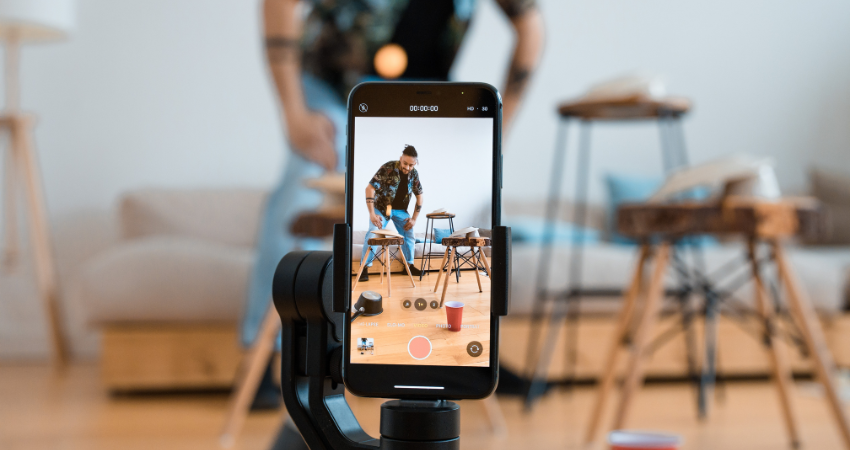
Video creatives work better in almost all niches, but on one condition — if they look native. The first few seconds decide everything. The user should recognize themselves in the problem, not see an ad. Next — a short, understandable solution without exaggeration or aggressive promises. This is the kind of presentation that allows videos to pass moderation and scale normally.
- Images that are too “perfect” cause distrust
Simple, everyday scenes, real people, and minimal visual noise work better. Creative content for advertising should look like part of the feed, not like a billboard.
Creatives for targeting are also no longer universal. What works for a cold audience almost always doesn’t work for a warm one. Creatives for targeted advertising need to be adapted to the stage of the funnel, otherwise the algorithm simply won’t understand who to show them to and why.
Landing pages: the main cause of spending problems
Most of the problems with moderation and scaling today are related to landing pages. When people say that landing pages don’t always work, they usually mean not the format itself, but its specific implementation.
A modern landing page should be as clear as possible. The user should understand in a few seconds where they have landed and what is being offered to them. If this does not happen, the person leaves, and the algorithms record a negative signal. For Meta, TikTok, and Google, this means that the ad leads to a low-quality page.
A separate issue is the correspondence between the creative and the landing page. If the ad creative promises one thing, but the user sees something completely different on the landing page, this is a direct path to a decrease in impressions or blocks. That is why today it is important to work with the link as a single product, rather than separate parts.
Technical aspects are also critically important. Slow loading, poor mobile version, intrusive pop-ups, and the absence of basic trust elements negatively affect not only conversion but also the platform’s attitude toward the entire campaign. Even if the landing page itself looks “normal,” this may not be enough.
What can really get you banned?
In most cases, being banned is not a coincidence. Platforms block or restrict campaigns due to systemic errors. Most often these are:
- Manipulative promises;
- Clickbait wording;
- Use of prohibited topics without the correct setup;
- Discrepancy between the creative and the landing page.
Advertisers often believe that the problem lies in a single specific creative. In reality, the algorithm evaluates user behavior across the entire campaign. If most people interact negatively with the landing page, even “clean” ad creatives will start to be restricted.
A few real-life examples
Video creatives shot on a phone without complex editing do well on TikTok. And it doesn’t matter whether it’s an ad for the popular Pepsi brand or the local Novus supermarket.

On Meta, the same offer can behave differently depending on how it is presented. Aggressive ad creatives for Instagram receive limited delivery, while native creatives with a clear message scale without any problems.
On Google Ads, it is often enough to refine the landing page to bring the campaign to life. After improving the page structure and loading speed, the Quality Score increases, the CPC drops, and the ad starts working without changing the creatives.

Conclusion
In the new reality, advertising creatives and landing pages are no longer separate elements. It is a single system that platforms evaluate comprehensively. If something falls out of logic, algorithms quickly fix it.
Today, the winners are those who create simple, understandable creatives for their target audience, native video creatives, and honest landing pages without manipulation. In 2026, you need to think not only as a buyer but also as a platform. This approach allows you to run campaigns for a long time, stably, and without bans.