
Are you launching a Facebook ad campaign and already imagining a “roulette” with an uncertain outcome? Of course, a couple of days after launching the campaign, you will see a profit or loss, but you can have more guarantees right from the start by choosing “the right” format. There are different types of advertising, and it’s not just a matter of “checking a box” in Ads Manager. It’s a tool that determines whether your campaign will be successful or whether it will be wasted or banned. Choosing the right format increases CTR by 40-50% and ROAS by half. Let’s break it down step by step: from campaign goals to real-life cases, so you can launch campaigns without any worries.
Campaign goals: the basis for all types of advertising
The campaign goal is one of the first actions in Ads Manager, which opens up the available types of Facebook advertising. Without the right choice, targeted Facebook advertising is already doomed to failure. Even the desire to “send” to the universe, they say, must be done correctly, so what can we say about campaign goals — here you definitely need well-thought-out specifics and a strategy!
- Recognition: Introduction to the offer, fairly cheap traffic for the top of the sales funnel.
- Traffic: Landing page clicks — the basis for affiliate marketing.
- Interaction: Likes, shares — warm up the audience before the sale.
- Leads: One-click applications, top for nutria.
- Sales: Conversions with pixels — a great option for crypto and e-commerce.
Tips for beginner arbitrageurs:
Start with the “Traffic” goal to attract a cold audience, then switch to “Sales” after installing the pixel, testing 3-5 creatives on a $50-100 budget over 48 hours to train the algorithm. Use 1–2% lookalike audiences and test-to-event (TTI) for iOS 14+, disabling ineffective ads with a ROAS below 2 and scaling successful ones. Well, then, as they say, you’ll be happy, at least.
Ad types: Detailed breakdown
- Static image
This is a classic format where you upload a single high-quality photo measuring 1200×628 pixels and add text that takes up less than 20% of the space — otherwise, Meta simply won’t run the ad. It is best suited for a quick introduction to an offer in the news feed or Stories, where you need to grab attention with a hook at the top and call to action at the bottom. Its simplicity makes it an ideal start for beginners, but the key is relevant visuals that solve the audience’s problem. We believe and hope that you already know it perfectly!
- Video advertising
It’s all about dynamics here: a short video from 6 to 30 seconds with mandatory subtitles, because 70% of people watch without sound. It is shown in Reels, Stories, or the feed, where the goal is maximum interaction by retaining attention for more than 50%. The hook must be in the first 3 seconds so that the viewer does not scroll past, and the rest of the video smoothly leads to the offer. Works great for demonstrating a product in action, especially in a mobile format.
- Carousel advertising
Allows you to show the whole story in 2-10 slides that the user scrolls through in the feed or Messenger. Each slide has a separate focus: the first raises the problem, the next ones show the solution or advantages, and the last one is a clear offer with a button. The CTR for carousels is often higher than for static images because they provide more information without redirecting to the website — ideal for multiple products.
- Lead forms
A convenient form right in the Facebook app — users enter their name and phone number in seconds, without going to an external website. It appears to users in Stories or Messenger and is optimized for collecting leads with low CPL. Auto-filling data from the profile speeds up the process, making the format ideal for nutraceuticals or services that require quick applications.
- Dynamic advertising
Automatically pulls products from your catalog and shows them to those who have already interacted with the site – classic retargeting. Works well in the feed or Audience Network for sales purposes, but requires a pixel with at least 100 events. The algorithm itself selects the best creatives, which saves time and increases conversion.
- Collection/catalog ad format
This is a full-fledged product catalog in the form of a grid that expands into a separate mini-storefront when clicked. Suitable for e-commerce in the feed, where the user immediately sees the assortment and can buy. Converts well when you need to show many products at once.
- Stories
A vertical 9:16 format for photos or videos that fits perfectly on mobile screens — 98% of traffic comes from there. Only shown in Facebook or Instagram Stories, where CTR reaches 3–5% thanks to immersiveness. Short, dynamic content with swipe gestures increases engagement.
- Messenger
The “Write in Messenger” button leads directly to a chat where a bot or manager processes leads. Low CPL due to personalization is displayed in the feed or Messenger. Great for niches where dialogue is needed — from consultations to sales.
- AR filters
Interactive masks and effects in Stories, where users can try on products virtually. CTR over 5% because it’s entertaining, but more difficult to create. Suitable for cosmetics, clothing, or creative campaigns.
- Event advertising
Invitations to webinars, events, or giveaways in the feed with a “Visit” button.
Low CTR, but good for warming up the audience for future sales. Easy to launch, with RSVP function.Coupons, discounts, or promo codes with a timer in the feed. Optimized for CPA sales, increases conversion through the FOMO effect.
- Offer advertising
Easy to combine with retargeting.
- Playable advertising
Interactive demo game or app preview directly in the ad. CTR around 4%, displayed in the feed for app offers or gaming. Forces the user to interact before downloading.
Most popular formats for targeting
Image
Hook at the top, CTA at the bottom. It’s not a game show, but it’s better not to forget — it will be more valuable to you.
Step-by-step launch:
- Use Figma or Canva with templates for FB Ads to create high-quality creatives.
- Target: choose interests + lookalike.
- Budget up to $20/day, 3-5 creatives.
Video ads and carousels
Video ads are currently the best way to attract attention. Make a 15-second video for Reels or Stories with subtitles, because 70% of people watch without sound. Start with a strong hook in the first 3 seconds, show the product in action, and end with an offer. If attention retention exceeds 50%, the ads will go to the top spots.
Carousel allows you to tell a story through storytelling on 5-8 slides. The first slide can raise the problem, and the following ones demonstrate the solution and benefits. The last one contains a direct offer with a button. Users scroll through, and the CTR is 30% higher than for a regular image. Test this format in the feed and Messenger.
Launch: Budget up to $30 per day, test different hooks, and optimize for retention on Reels.
Lead forms and catalogs
Lead forms collect applications directly on Facebook. The user opens a form with the fields “Name” and “Phone” without going to the website, and the data is auto-filled from their profile. The cost per lead is lower, so the format is popular for nutra or affiliate marketing in Stories and Messenger.
Dynamic advertising automates retargeting. Meta takes products from your catalog and shows them to people who viewed the website but did not buy. It works for “Sales” goals in the feed, but first, the pixel must accumulate 100 events, such as viewing a product or adding it to the cart. The algorithm selects creatives itself, which saves time and increases sales.
Launch: First, collect 50 leads through forms with a test event, then activate the catalog for Dynamics. There is a high chance that ROAS will improve within a week.
Real examples from affiliate, nutra, crypto
Nutra: advertising supplements

Offer: Probiotic supplements to improve digestion. Product promotion with payment per lead or sale through a CPA network. The cost of probiotics is $20–40, commission is $5–15 per lead.

Creative: 15-second video in the style of “Cook popular recipes without bloating.”
The first 3 seconds show a woman feeling uncomfortable after eating, then she prepares a salad, adds a supplement, and smiles. Subtitles: “Support digestion naturally,” Stories format.
Scheme: Stories Ads → landing page with application form → lead or sale → commission payment.
Target: women aged 25–45 with interests in “fitness,” “healthy lifestyle,” “vegetarianism,” and seasonal words. Lead forms for quick applications. Meta can be skipped if medical promises such as “cures” and clear words about supplements, vitamins, and magical results are avoided.

Affiliate marketing
Offer: woodworking plans.
Creative: tools — process — result.
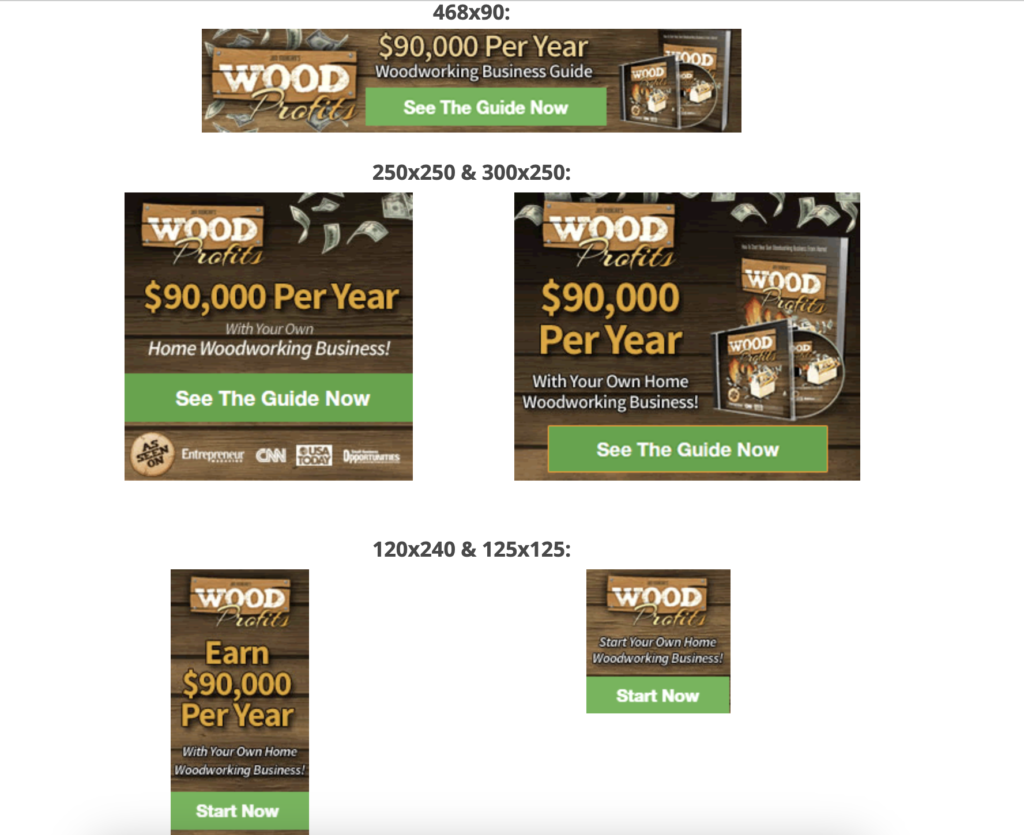
Affiliate advertises creative for a digital product (PDF files with drawings of furniture, tables, shelves) that sells for $17. For each completed purchase through their affiliate link, the affiliate receives a commission.
Scheme:
Facebook Ads (carousel) → landing page with offer → purchase on ClickBank → commission payment to affiliate.
Target: men aged 35–55, “woodworking.” Cold traffic + retargeting.
Crypto: Dynamic for exchanges
Offer: CPA from a licensed crypto exchange with a Canadian MSB license (FINTRAC). However, this requires a state license for crypto activities in one of the countries where Meta permits.
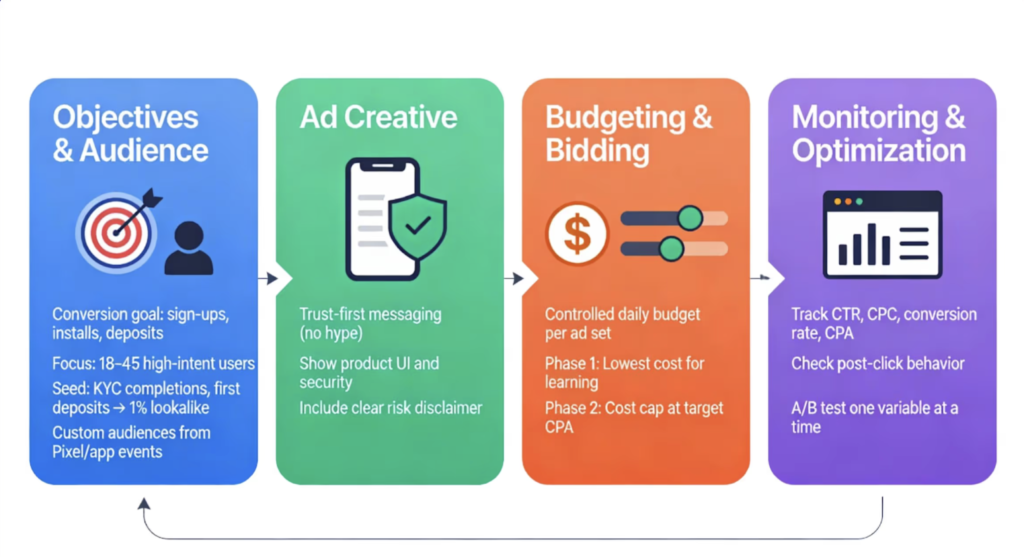
Creative: Auto-generated banners from the catalog: “Exchange BTC for USDT,” “Withdraw crypto to a card,” etc.
Scheme: Dynamic advertising → exchange website → KYC registration → CPA payment. Tracking via FB Pixel (CompleteRegistration).

Target: Interests “cryptocurrency”, “blockchain”, geo EU.
Result: Dynamic retargeting provides stable traffic after receiving whitelist status in Meta.

Tips for a profitable Facebook ad launch
- Creative tests: 3–5 options, $50 budget, 48 hours.
- Target: Interests, lookalike, and retargeting.
- Optimization: Change creative every 7 days, vertical for Stories.
- Mistakes: Text > 20%, no Pixel, iOS 14+ without TTI.
- Scale: Double up on profitable ones.
- Budget: $100–500 per campaign.
Conclusion
Facebook ad types offer incredible opportunities for any niche. Systematic testing of creatives, choosing the right campaign goals, and scaling only profitable ad sets ensure stable profitability. But to do this, you need to do something. You know, the logic of launching an ad should be flexible, creative, but at the same time rational.
Meta 2026 continues to value hooks, vertical formats, pixels, 48 hours of algorithm training, and budget increases for successful creatives. Those who adhere to these principles achieve stable results regardless of niche or geography. We hope you are definitely in these “ranks”!