
Don't miss interesting news
How to understand where to move in social networks to achieve success? Learn research and statistics, analyze trends and draw conclusions that will be relevant for your business. This is what any marketer will tell you and spend a lot of time on.
Good news! We have already done it for you. So, let’s share the insights!
No surprises here. Video tops the list of trends again. TikTok, Instagram Reels, YouTube Shorts, as well as video formats on LinkedIn and Threads have virtually become equal in popularity. This means one thing. Video content has become the priority format for most platforms.
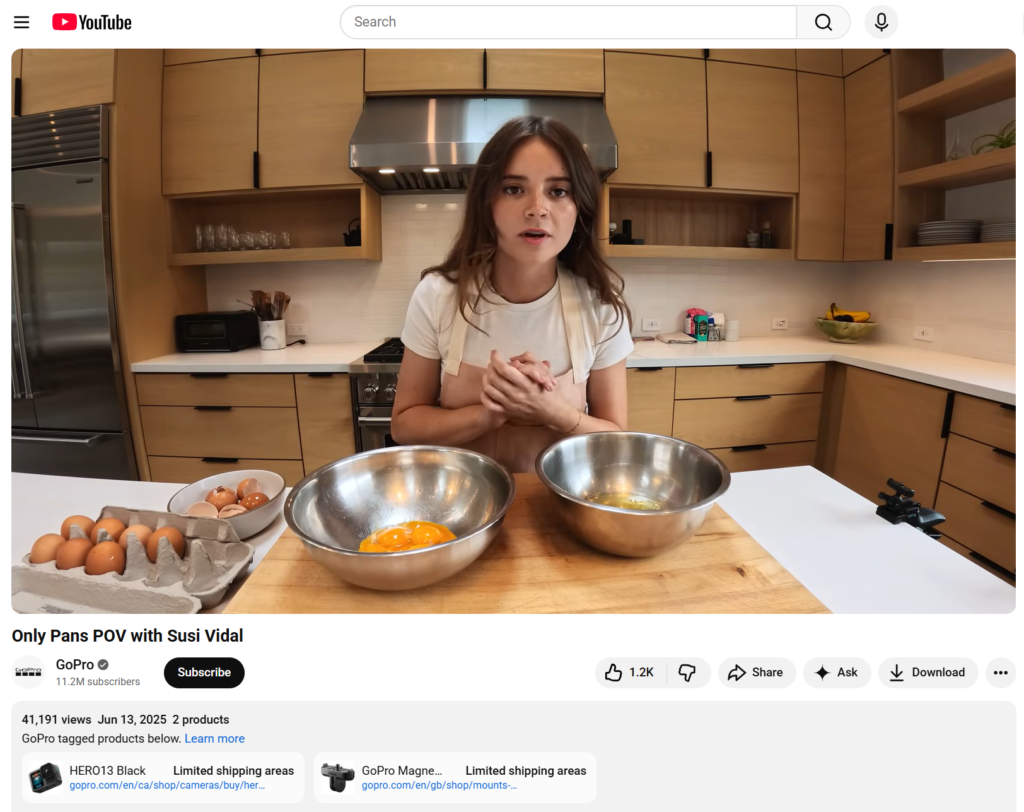
Short videos have long proven their effectiveness. They help to quickly attract attention, engage new audiences, and scale reach. At the same time, long formats have not disappeared. Moreover, platforms are gradually expanding the acceptable length of videos and encouraging creators to work with deeper content.
The formats are as follows:
For YouTube, this is a logical and timely step. The platform is one of the top three social networks where users most often have active profiles. In addition, it is attracting more and more attention from businesses. According to The 2025 Impact of Social Media Report, 68% of marketing leaders consider YouTube to be the platform that has the greatest impact on business results.
The conclusion is simple. In 2026, video will no longer be an option. If a brand does not work with video formats, it will either remain unnoticed or lose out to competitors who have already learned to speak to their audience in the language of moving content.
In the coming year, the impact of artificial intelligence on social marketing will only grow. For the market, this is no longer a question of the future, but a question of basic competence. According to The 2025 Index, 97% of marketing leaders believe that marketers must understand how to work with AI.
The key change lies elsewhere. AI content is no longer an experiment but is becoming commonplace. Tools are becoming so simple that creating posts no longer requires complex skills or a large team. Marketers are increasingly focusing on ideas, meaning, and quality control, while the algorithm takes care of the routine part of the work.
As Jim Lin, director of enterprise social media at Caterpillar, explains, AI allows people to simply imagine content and publish it immediately. No camera, editing, production, or extra people are needed. In fact, the only requirement is a strong idea.
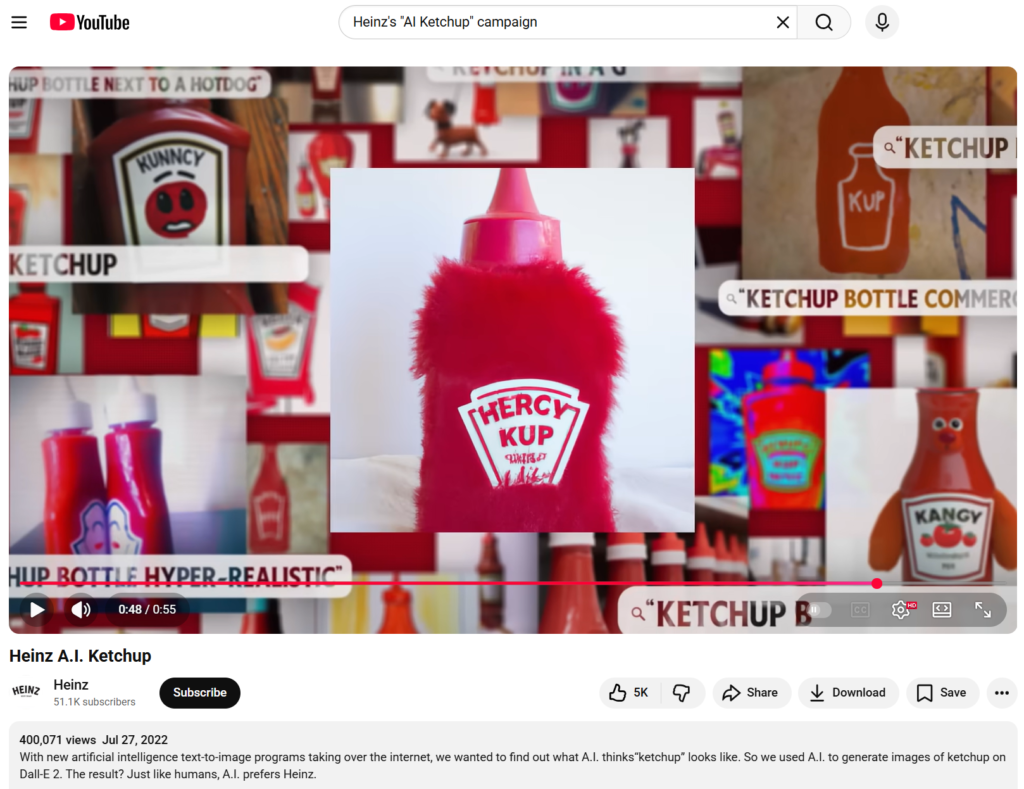
This shift is well illustrated by the Heinz case. Back in 2022, the brand launched a campaign with AI-generated content, asking various neural networks a simple question: what does ketchup look like? The results varied, but they had one thing in common. All the images strangely resembled a Heinz bottle. The campaign built a simple and clear message: even bots associate ketchup with this particular brand.
At the time, it seemed like an unusual experiment. But closer to 2026, such mechanics are becoming the new norm rather than the exception.
At the same time, the widespread use of AI content raises another issue: ethics. The more brands automate communication, the more attentive they need to be to transparency and trust.
The Sprout Q3 2025 Pulse Survey found that 52% of social media users are concerned about situations where brands publish AI-generated content without any labeling or explanation. People want to understand who they are interacting with.
Context is important here. According to the Sprout Q4 2025 Pulse Survey, 65% of respondents are positive about the use of AI for faster customer service on social media. Automation is not scary in itself. It only raises questions when it replaces humanity.
The main challenge for brands in 2026 is not whether to use AI, but how to do it. By maintaining transparency, respect for the audience, and live contact, which builds trust and loyalty in the long term.
In the Sprout Social Q2 2025 Pulse Survey, users were asked what they most want to see from brands on social media. The answers were revealing. Two things came out on top with almost identical results: live interaction with the audience (58%) and regular, original content series (57%).
This is no coincidence. The serial format works because it gives brands the opportunity to not just “post,” but to build a story.
Content series allow for a deeper dive into topics that are important to the brand and its audience. They create a sense of process and anticipation for the continuation. In addition, such formats often feature recurring characters. Viewers gradually get used to them, begin to recognize them, and that’s why they come back again. This is confirmed by the 2025 Content Benchmarks Report.
As Angelo Castillio, creator of the ProfitPlug project, explains, the reason is simple. People subscribe to people, not brands. The “big name” effect is gradually disappearing. Audiences care about the personality, style, and consistency of those they see regularly.
However, not all serial formats work the same way. According to Castillio, two polar approaches are popular today.
The first is maximally simple, raw, almost unedited videos, where the main thing is not production, but live speech and character. The second is the opposite: well-thought-out, cinematic formats with a serious visual component. Many brands and startups even deliberately copy the logic of series, creating office content in the style of The Office. These formats have one thing in common: seriality. It is important for people to follow the story and come back for a new episode.
This is exactly how Shameless Media worked. The Australian media outlet, which usually publishes clips from its podcasts, launched a separate office series called The Shoffice.
It shows not a polished picture, but the real life of the team at work. Lively conversations, humor, behind-the-scenes moments, and an atmosphere that is not usually brought into the public space. The format turned out to be both bold and honest, which was a perfect fit for millennials and Gen Z, who value authenticity and access behind the scenes.
Shameless didn’t stop there. The success of the series led to the launch of the spin-off Out of Shoffice, where the team shows life outside the office with the same light and playful presentation.
The conclusion is obvious. In 2026, serial content becomes not just a format, but a tool for retaining attention. It works when a brand is ready to be consistent, show people, not just a logo, and build a story that people want to follow.
According to The 2025 Content Benchmarks Report, in 2024, brands published an average of 9.5 posts per day on various social networks. This is slightly less than in 2023, but many B2C niches have gone much further. Media, retail, entertainment, sports, and lifestyle sometimes exceeded this figure several times over.
The result is predictable. Social networks remain oversaturated with content. Trends change faster than users can keep up with them. The feed moves at breakneck speed, and in this mode, the audience barely has time to interact, let alone pay attention.
That is why experts agree that in 2026, brands will have to seriously combat social media fatigue. And the key to this is not to post even more. On the contrary. Post less, but do so consciously and with a clear purpose.
As Greg Swan, senior partner at FINN Partners, points out, oversaturation is a signal. But not a signal to speak louder, but a signal to speak more accurately. A simple question to ask yourself: if the brand disappeared from social media tomorrow, would anyone notice? If the answer is “no,” then it’s time to stop chasing reach and start creating moments that matter.
What are these moments? Those in which people feel that they are seen and heard.
Swan advises treating your audience not as customers, but as a community. Even if it’s a B2B company or a utilitarian service. Every brand has the opportunity to build loyalty and a sense of belonging around its own values. Inside jokes, a sense of belonging, and pride in being part of the brand’s story work much better than yet another viral video.
A striking example of this approach is the TikTok experiment by independent musician Sofia James. She posted seven videos in a row to see which one would get the most engagement. Each video had its own “group.” Viewers who saw the seventh video in their feed automatically became part of “Group 7,” and so on.
Formally, it was a simple algorithm test. In essence, it was a game with a sense of belonging. People didn’t just watch videos, they felt like they were part of a small community with its own identity.
And this is where the key shift lies. In 2026, the winners will not be those who accidentally caught the virus, but those who know how to create resonance and build a community that people want to return to.
In 2026, simply listening to your audience will no longer be enough. Brands that know how to not only respond to but also anticipate people’s needs and expectations will gain a competitive advantage.
The data for this is already available. For example, the Sprout Q4 2025 Pulse Survey showed that two things are most important to Gen Z on social media. First, interaction in smaller, more intimate spaces, such as broadcast channels or closed formats. Second, unexpected moments of attention from brands, when users feel that they are truly cared for, rather than just following a script.
This is confirmed by The 2025 Index. Among the main characteristics of brands that stand out on social media, two consistently lead the way. How a brand interacts with its audience and how quickly it responds.
Speed of response is no longer a nice bonus. Approximately three-quarters of users believe that a brand should respond on social media within 24 hours. If there is no response at all, most will not hesitate to go to a competitor.
That is why experts predict a return of community management to the focus of marketing strategies in 2026. And not formal, but systematic.
As Kendall Dickenson, an independent social media consultant and author of No Filter, points out, organic reach increasingly depends not on what a brand posts, but on how it interacts with its audience. Community teams are gradually shifting from a reactive model to a proactive one. They initiate conversations, work with superfans, and form micro-communities on various platforms.
This shift is also reflected in budgets. Brands are beginning to allocate separate resources for community work. This may include hiring specialized managers, investing in social listening tools, or loyalty programs for the most engaged subscribers.
New platforms will also play an important role in this transformation. Substack and Bluesky are increasingly seen as spaces for direct contact with audiences without algorithmic noise.
According to creator economy expert Leah Haberman, interest in Substack will explode in 2026. The reason is simple. Direct access to the audience, more conscious interaction with content, and a sense of belonging to a cultural moment. It’s reminiscent of early TikTok, when everyone felt that something big was just beginning and didn’t want to miss out on the movement.
The main conclusion here is obvious. In 2026, content strategy and platform selection can no longer exist separately from engagement. Brands that build not just reach, but lively, attentive, and consistent interactions with people will win.
In 2026, brands will have to make a choice. Either build a genuine connection with their audience through stories and meaning, or continue to mechanically jump from trend to trend, hoping to catch a short wave of attention.
As Leah Haberman explains, today, it is not the brands that are quickest to pick up on the latest trend that are truly engaging. The winners are those who create recognizable characters, their own mythology, and a cohesive brand world that feels unique. Trends can be a tool, but they cannot replace strategy.
The demand for authenticity automatically brings us back to the topic of AI. Especially when it comes to virtual influencers. Despite talk that AI creators are supposedly the future of influencer marketing, consumers are much more cautious.
According to the Q3 2025 Pulse Survey, 46% of social media users are uncomfortable with brands using AI influencers. This opinion is supported by Tameka Basil, who urges brands to abandon AI “artists,” “creators,” and even the use of artificial intelligence in advertising.
The audience can easily tell when content is not created by a human. People value a lively tone, real experiences, and the very imperfections that make stories relatable. The more brands normalize fully generated content, the faster they lose trust.
The alternative is obvious. Work with real creators who are organically aligned with the brand in terms of themes, values, and style. These are the partners who help tell deeper stories and give the audience a familiar, living face that is easy to remember.
A good example is Square. On its social media, especially YouTube, the brand is developing a series called See you in the neighborhood. It shows real businesses that use Square’s payment solutions. Entrepreneurs talk not about technology directly, but about their connection with their local communities and how their business becomes part of the everyday life of the neighborhood.
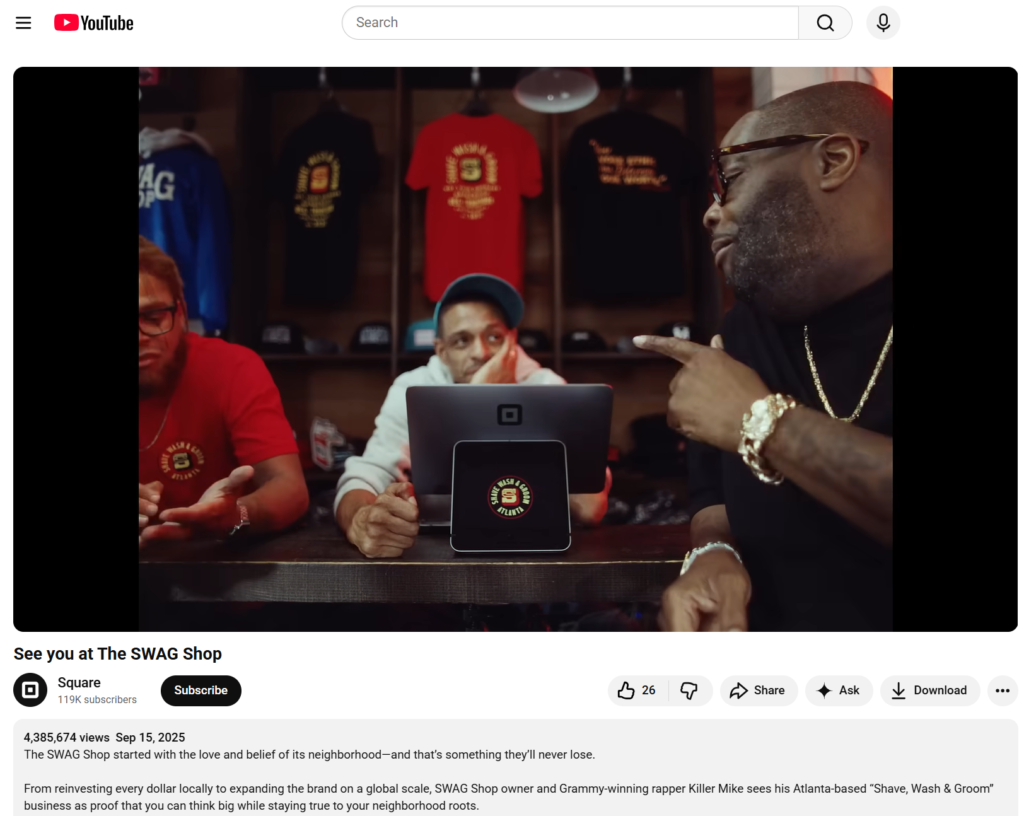
This is not advertising in the classic sense. It is human storytelling that works much longer than any trendy sound or format.
The conclusion is simple. In 2026, the winners will be brands that speak human language, show real people, and build stories that people want to believe in.
Social networks have finally ceased to be just a platform for entertainment. According to the Sprout Q2 2025 Pulse Survey, social search is already ahead of classic SEO among younger generations. Almost one in three users skips Google altogether and starts searching directly on TikTok, Instagram, or YouTube. For Gen Z, this figure rises to more than half.
And here’s an important point. People aren’t just looking for memes or videos to kill time. Social media is increasingly being used to make purchasing decisions. How to do it, what to choose, what the product looks like in real life, whether the brand is trustworthy. This is where guides, demos, reviews, and live feedback come in.
At the same time, the logic of the search itself is changing. Social networks are actively implementing AI features. Like Google with AI Overview, platforms are starting to show short, structured answers directly in search results. The user does not receive a list of links, but a ready-made summary on the topic, which can be quickly reviewed and used to make a decision.
This means that the battle for attention is moving to a new level.
The new generation of marketers is no longer thinking solely in terms of SEO. The focus is shifting to social engine optimization and so-called answer engine optimization, where content is created to immediately respond to user queries.
Brands should review how their content looks in social search on different platforms. Is it easy to find? Is it clear from the first screen what it is about? Does it provide a clear answer, or does it force the user to search further?
The reverse impact of social networks on classic search should also be taken into account. Posts from Reddit, YouTube, and Instagram are increasingly appearing directly in SERP. At the same time, social content meets the E-E-A-T criteria well thanks to the engagement, virality, and reaction of a live audience. For search engines, this is a signal of authority that directly affects brand visibility.
In fact, social platforms and search are no longer separate worlds. They are merging into a single ecosystem.
There are still many changes ahead. The trends for 2026 are not limited to this list, but it gives a good indication of the general direction. In short, the winners will be those brands that think beyond the “post + reach” formula and understand that social networks have become a full-fledged point of search, choice, and trust.