
Search traffic is clearly not what it was five years ago. SEO is not a monster with which there is only one way to make friends, but an ally with whom you can get along in many ways! People are increasingly looking for answers to their questions directly on Instagram or TikTok, rather than on Google. Nowadays, people often even look for training and mentors through social networks. Therefore, it is not surprising to search for “seo smm training” on Instagram. Next, we will discuss how to combine SEO optimization, SMM website promotion, and more. We will break it down step by step with real examples.
What is SEO on social media?
SEO on social media is when you take care of the SEO optimization of your personal/work profile, posts, and videos. Then the content is published, taking into account the internal search of platforms, because it can really bring in customers. When someone searches for “vitamins for hair and nails” on Instagram, your content will jump ahead thanks to keywords in your bio, captions, and hashtags. Reach can increase by 30-50%, and clicks to the site will pour in without paid advertising.
There are specific reasons why platforms have partially turned into search engines:
- Social networks process over 1.5 billion queries daily, especially from Gen Z, who often choose it over Google.
- On Instagram, 30% of traffic comes from internal search.
SEO in social media focuses not on Google rankings, but on algorithms that value the relevance of content and user queries.
Keywords: where to get them and how to use them
Rule number one: avoid short queries like “SEO.” They are competitive, but the return is too low. Long-tail phrases with 3+ words give better traffic from social search because they more accurately match what people are looking for.
Quick search for possible keywords in 15 minutes:
- Open Instagram or TikTok, enter your niche (“vitamins,” “fitness,” “courses”).
- Follow the autocomplete suggestions. These are possible queries with demand.
- Review the top posts, analyze them, and form a list of phrases from captions and hashtags.
Examples for different niches:
- Nutrition: “vitamins for immunity in autumn,” “rejuvenating capsules reviews.”
- Affiliate: “How to make money on affiliate programs for beginners,” “passive income without investment.”
- Local business: “Beauty salons Kyiv Podil,” “iPhone repair Kharkiv prices.”
Where to place them (3 key areas):
- Profile bio – the first thing the algorithm sees (max. 150 characters).
- The first 3 words of the caption – ranked in search.
- Hashtags + alt text – for images and videos.
This approach can give you at least twice as much coverage from the platform’s search as random posts without optimization. Test it on at least 5 posts, and you’ll see the difference.
Another way to professionally search for keywords is Ahrefs Keywords Explorer. It provides ready-made lists of queries and words with relevant frequency and complexity. Just enter your niche, and you’ll get hundreds of long-tail options with accurate search figures. However, you will need to filter them carefully, as not all of them are relevant and important.
Platform Top keywords (examples) Where to insert
Instagram luxury hotels Melbourne, best skincare for acne Bio, alt text, Reels captions
TikTok learn languages fast, hotel review tips, hashtags, the first 3 seconds of video, description
Facebook, Instagram management, Facebook marketing “About us”, posts with CTA
LinkedIn social media strategy, content marketing Profile headline, articles
Content strategy is important for traffic
Effective social media content for SEO is built according to the following pattern: hook + key + value + CTA (“Details in highlights,” for example). For example, short 15-second Reels about SEO SMM training perfectly hook an audience of young women who are looking for creative digital work.
- Reels/Stories: 5-7 hashtags (#seo #smmpromotion).
- Carousels: 10 slides about success in the field, the advantages of working in this niche.
- UGC: Reposts from customers and mentions of cooperation and any interaction in general add 25% to traffic.
Entertain and be useful — this is the formula that brings stable profit.
Real examples from marketing and affiliate marketing
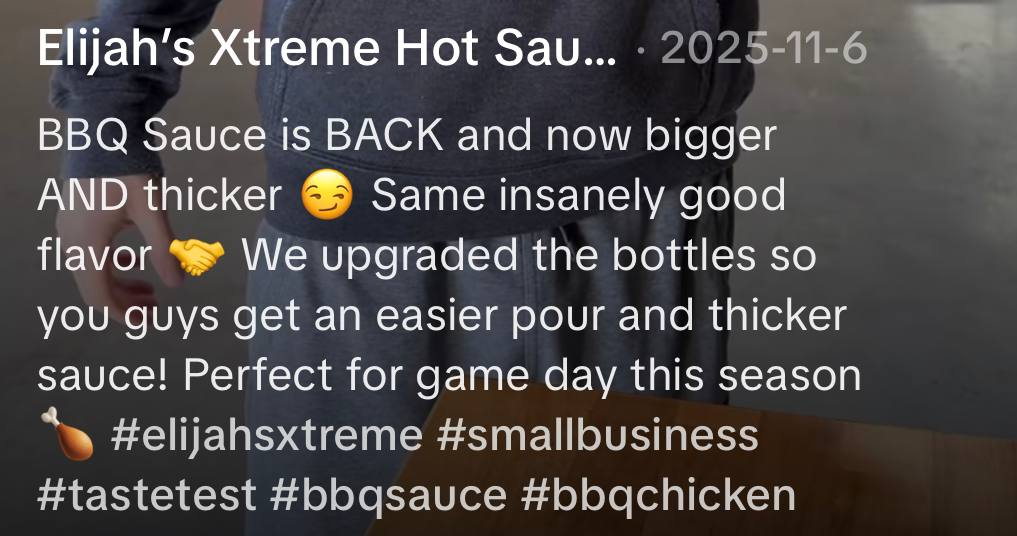
Case 1: Elijah’s Xtreme — a sauce startup that took off with a bang
A father and son launched the sale of hot sauces on TikTok. Instead of classic advertising, they focused on “review content” – unboxing orders, communicating with the audience on various topics, responding to trends and challenges such as the “Impossible Bottle Challenge.”
Their bio says “hot sauce company,” so they show up immediately in searches.
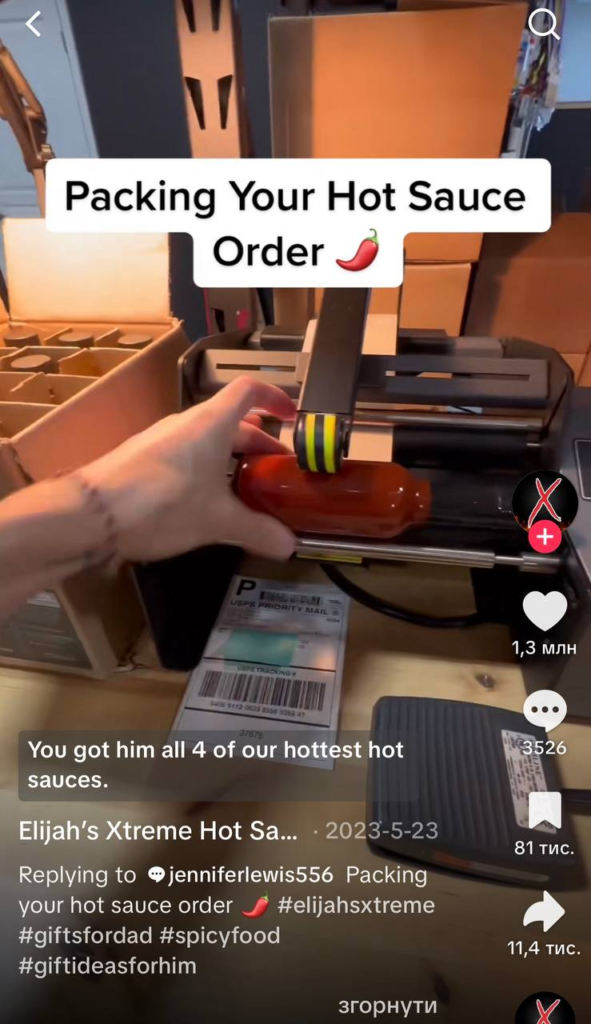
SEO strategy on TikTok:
- Keywords in video captions: “hottest sauce 2024,” “hot sauce challenge.”
- Hashtags: #HotSauceAddict #SpicyFoodLovers
- Replies to comments became new content (the algorithm loves activity)
Results
- 10+ million views from organic engagement loops
- TikTok became the main driver of GMV (sales)
- Transition to “Shop-First” — direct checkout without external landing pages
Case 2: Glossier on Instagram
The cosmetics brand organically weaves “clean beauty” trends into social media SEO, in Reels captions such as “best skincare for acne.” The brand’s social media reach grew by 150%, and Socialinsider recorded an ERL of 12% and 1.2 million visits to the site per month thanks to high-quality search keywords.

Case 3: Duolingo on TikTok
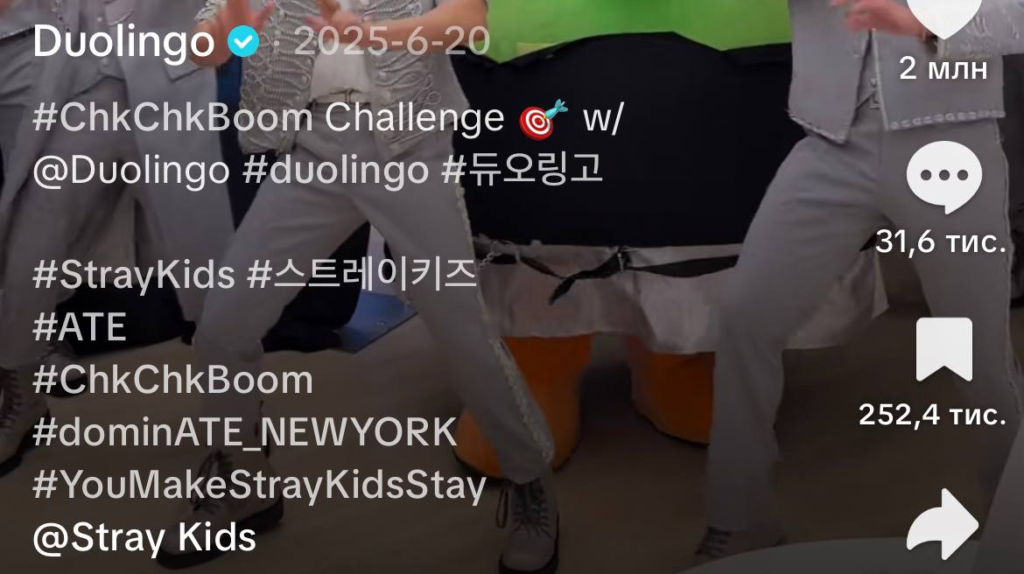
The well-known green owl Duo makes videos with trends and keywords such as “learn languages fast SEO tips” in hashtags (#DuolingoHacks). They now have 17 million followers on TikTok, 18-20% engagement (five times higher than average), app downloads have increased by +29%, and website traffic by +40%. TikTok for Business and Enrich Labs confirm that 474 million likes and leadership in the App Store are partly due to correct search ranking and the promotion of their own hashtags, challenges, and local jokes.
Success metrics and tools
Track search reach in native Insights, UTM clicks to the website, and social search rankings. It is also important to set goals, such as getting 20% of traffic from social networks per month, and analyze your path to achieving them.
Use Google Analytics together with platform dashboards. Add post CTR (target 2-5%) and conversions from social networks — this will show the real effect of SMM and SEO promotion.
Common mistakes and how to avoid them
Many people think that SEO in social media is just a set of hashtags, but without a strategy, content gets lost.
Top mistakes:
- Ignoring long-tail: simply #seo doesn’t work, but the query “social media content for seo” has a better chance of success.
- Not doing A/B testing: Be sure to compare posts with and without keywords.
- Having an empty bio: this is the first thing the algorithm scans.
Also, don’t forget the content rule: 80% value and usefulness, 20% sales. Then your reach will go up without annoying your target audience.
How to scale: from test to “working” system
Started with 5 posts? Time to move on to a stable system:
- Plan a calendar with keywords for a week/month.
- Analyze weekly what attracts people in their search for the platform.
- Scale the best content.
If you do all this well, affiliates will get a bonus in the form of passive traffic to the landing page, and brands will get leads in Direct. Your SEO SMM training will pay off in 1-2 months, provided you put in the effort.
Now social networks are ready to become your stable source of traffic. Update your bio, add keywords to your next posts, and the first results will be just around the corner!